



Imagine walking into your Athens, GA home on a humid summer day, only to be greeted by a musty smell and dampness in the air. Installing a dehumidifier can transform your living space, but where do you start? Understanding the right placement, making sure it fits, and ensuring it works efficiently are all essential steps. Let’s explore how to install your dehumidifier for the best results properly.
Understanding the Importance of Dehumidifiers in Your Home
While you may not think about humidity often, understanding the importance of dehumidifiers in your home can greatly enhance your comfort and health. High humidity levels can lead to musty odors, mold growth, and even health issues like allergies and respiratory problems. By reducing moisture in the air, a dehumidifier helps create a more pleasant living environment.
Dehumidifiers can also protect your home’s structure and belongings. Excess moisture can damage wood, paint, and insulation, leading to costly repairs. With a dehumidifier, you can safeguard your investments while also improving air quality.
Additionally, a well-functioning dehumidifier can help your HVAC system run more efficiently. When humidity levels are balanced, your heating and cooling systems don’t have to work as hard, which can lead to lower energy bills. Regular annual servicing of dehumidifiers is suggested for optimal performance, and in the event of urgent issues, our 24/7 emergency service is ready to provide immediate assistance.
Choosing the Right Dehumidifier for Your Needs
Selecting the right dehumidifier can greatly enhance your home’s comfort and efficiency.
First, assess your needs by measuring the humidity levels in your space. If you have a small area, a portable unit might suffice. For larger basements or multi-room coverage, consider a whole-home model.
Next, think about the capacity. Dehumidifiers come in various sizes, typically rated by pints of moisture removed per day. Choose one that matches your space’s square footage and humidity levels.
Energy efficiency is also essential; look for models with the ENERGY STAR label to save on utility bills.
Noise levels can vary, so opt for a quieter model if you plan to use it in a living area.
Lastly, consider additional features like built-in humidistats, auto shut-off, and continuous drainage options. Regular maintenance and clean air ducts will also ensure your dehumidifier operates at peak efficiency.
Making these informed choices will guarantee your dehumidifier effectively meets your specific needs.
Preparing Your Space for Installation
Preparing your space before installation is crucial to guaranteeing a smooth process and peak performance of your new dehumidifier.
Start by selecting an appropriate location that’s close to an electrical outlet and away from walls or furniture to facilitate proper airflow. Clear the area of any clutter, dust, or debris to create a clean environment for installation. Additionally, check for any potential water sources, like leaks, that might interfere with your dehumidifier’s efficiency.
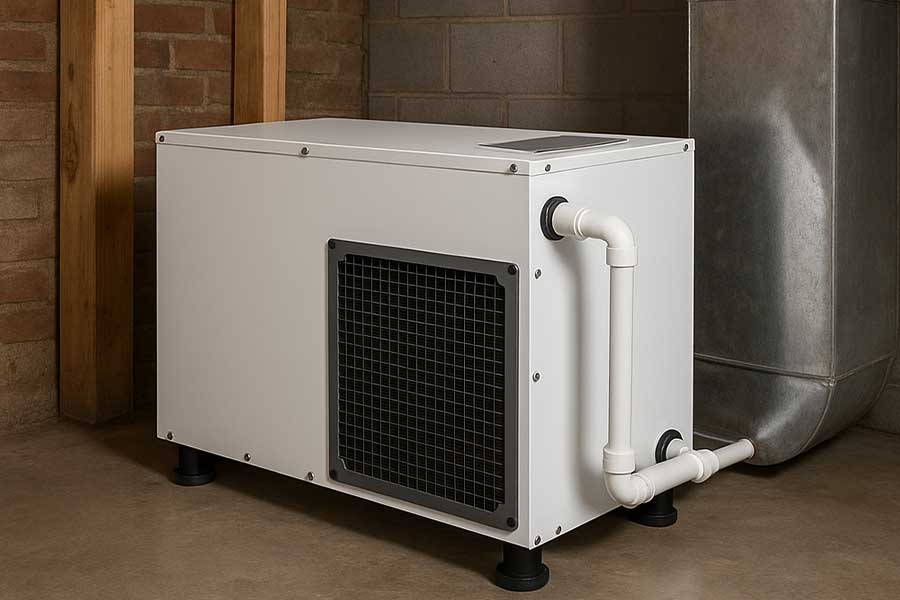
Make sure the floor is level and stable to support the unit’s weight. If you’re using a drain hose for continuous drainage, plan the route so it doesn’t obstruct traffic or access.
Finally, consider measuring the space to confirm the dehumidifier fits comfortably. By taking these steps, you’ll set the stage for effective moisture control and enhance the overall comfort of your home. Additionally, consulting with NATE-certified technicians can provide valuable insights for optimal installation and performance.
Step-by-Step Installation Process
Installing a dehumidifier can be broken down into a few straightforward steps that make the process manageable and efficient. First, choose the right location; ideally, it should be in a central area of your home, away from walls and furniture.
Next, plug in the unit and set the desired humidity level. Proper installation is crucial for ensuring energy-efficient systems operate effectively and provide the best results.
Here’s a quick checklist to follow:
- Check the Drainage: Verify the dehumidifier has proper drainage, either through a hose or a bucket.
- Turn It On: Power up the unit and listen for any unusual noises, confirming it’s functioning correctly.
- Monitor Humidity Levels: Use a hygrometer to track the humidity levels over the next few days, adjusting settings as necessary.
Maintenance Tips for Optimal Performance
Regular maintenance is crucial to keep your dehumidifier running at peak performance.
First, check and clean the air filter monthly. A clogged filter can restrict airflow and reduce efficiency. If it’s reusable, wash it thoroughly; if not, replace it as needed.
Next, inspect the water collection bucket for any signs of mold or mildew. Empty and clean it regularly to prevent buildup.
Additionally, verify the drainage hose is clear and free of blockages to allow proper water flow.
You should also monitor the humidity levels in your home. Adjust the settings as necessary to maintain ideal humidity, typically between 30-50%.
Finally, schedule annual professional maintenance with a trusted HVAC service like Conditioned Air Systems. They’ll guarantee your dehumidifier operates efficiently and effectively, extending its lifespan and saving you money in the long run.
Regular upkeep helps you enjoy a comfortable, dry environment year-round.
Conclusion
Installing a dehumidifier can greatly improve your home’s air quality, especially since over 50% of American homes suffer from excess humidity. By following the steps outlined, you’ll guarantee your unit runs efficiently and keeps your living space comfortable. Regular maintenance not only extends the life of your dehumidifier but also maximizes its performance. So, take action today to create a healthier environment in your Athens home and enjoy the benefits of balanced humidity levels!