

Homer is a small town, but the winters here are no joke. Sitting in the upper piedmont of Banks County, the area catches cold air that funnels down from the northeast Georgia mountains and settles across the open farmland and wooded lots that make up most of the landscape. Homes here are spread out, often on larger parcels, and many were built decades ago with little thought given to how heating systems would hold up over time.
A big part of what we see in Homer comes down to age. The housing stock here skews older, with a significant number of homes built in the 1960s, 70s, and 80s that are still running their original or second-generation heating equipment. Those systems were built to last, but they were not built to last forever, and the rural setting means they often go longer between service visits than they should.
Conditioned Air Systems has been serving Banks County and the surrounding region since 1983. We know these homes, we know this climate, and we are ready to help when your furnace stops doing its job.
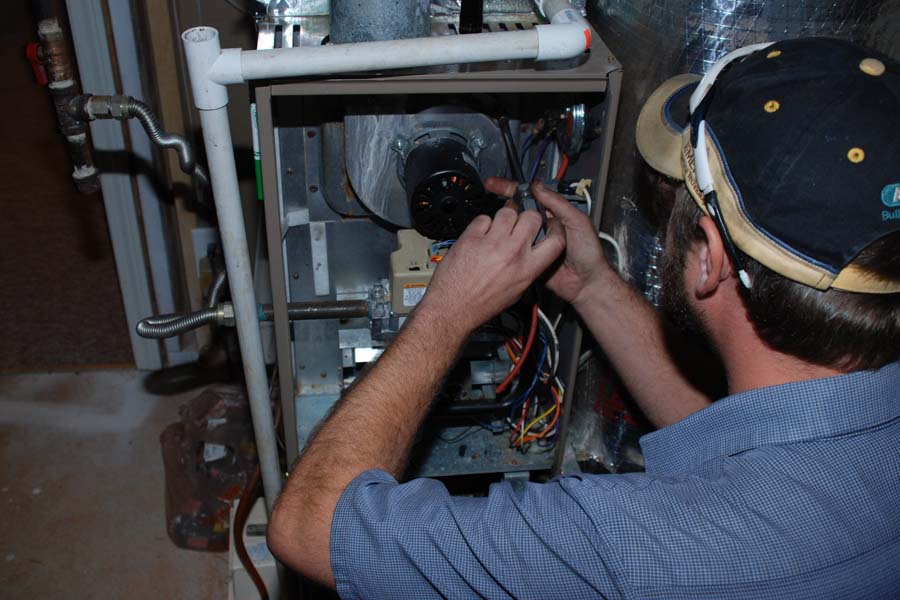
In a rural community like Homer, a furnace failure can mean a long, cold wait if you do not act on the early warning signs. Watch for these indicators that something is not right with your system.
That last point matters more than most people realize. A furnace pushing 15 to 20 years in a home that deals with cold winters and inconsistent maintenance is operating on borrowed time. Catching a developing problem now is far less disruptive than an emergency repair in the middle of a January cold snap.
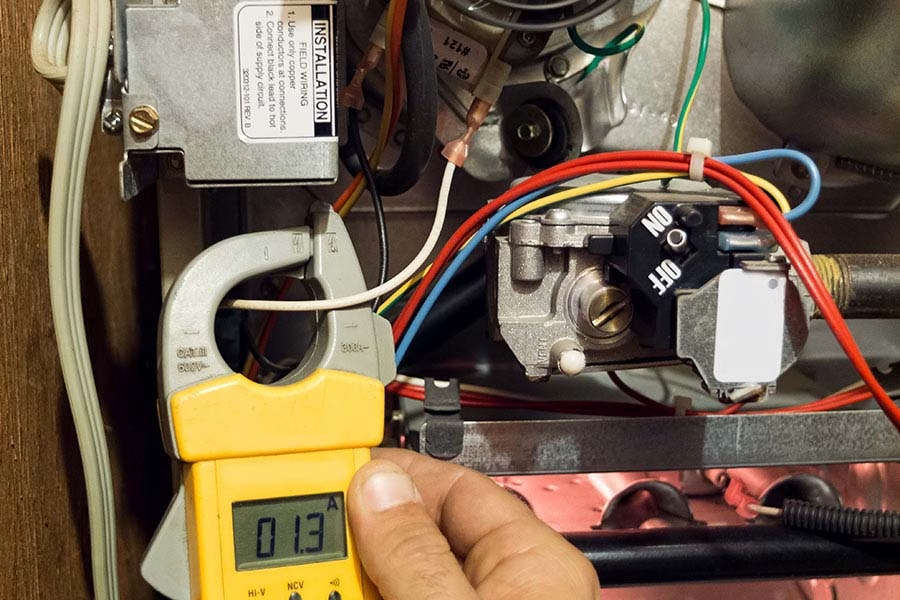
The combination of older homes, rural settings, and northeast Georgia winters creates a specific set of furnace problems we encounter regularly in Homer. Chief among them is heat exchanger deterioration. In systems that are 15 years or older, the heat exchanger has often been through enough thermal expansion and contraction cycles that small cracks begin to form. This is especially common in homes where the furnace has been running with a dirty filter for extended periods, which forces more heat stress onto the exchanger.
Propane systems are more common in Homer than in more urbanized parts of the region, and they come with their own set of concerns. Propane furnaces require precise gas valve calibration and clean burner operation to run safely and efficiently. When those components drift out of spec, often due to years without a tune-up, the system burns fuel inefficiently and puts uneven wear on the heat exchanger and combustion chamber.
We also see a lot of issues with standing pilot systems in older equipment. The thermocouples on those older units wear out and cause nuisance shutdowns that homeowners sometimes learn to live with rather than address. That workaround can mask a more serious underlying problem, and it is always worth having a technician take a proper look.
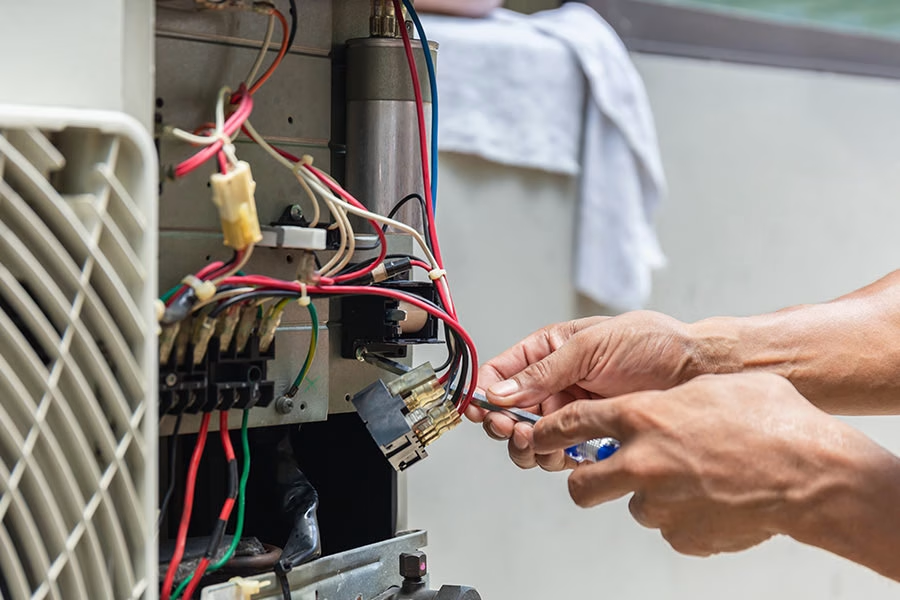
Our repair process is built around understanding the full condition of your system, not just fixing the symptom that brought us out. When we arrive, we inspect every major component, including the heat exchanger, burners, ignition system, gas valve, blower motor, flue venting, and all safety controls. For propane systems, we also verify regulator pressure and burner calibration as part of the standard check.
We complete all approved repairs on the same visit whenever possible, and we keep our service vehicles stocked with the parts most commonly needed for the equipment types we see throughout Banks County. If a part has to be ordered, we will give you a clear timeline and follow up promptly. We do not leave jobs half-finished or let them sit on a schedule for weeks.
Every repair is backed by our full one-year warranty on parts and labor. Our technicians are NATE-certified and train monthly, which means they stay current on older equipment that many companies no longer bother to learn. In a community like Homer, where older systems are the norm, that knowledge matters.
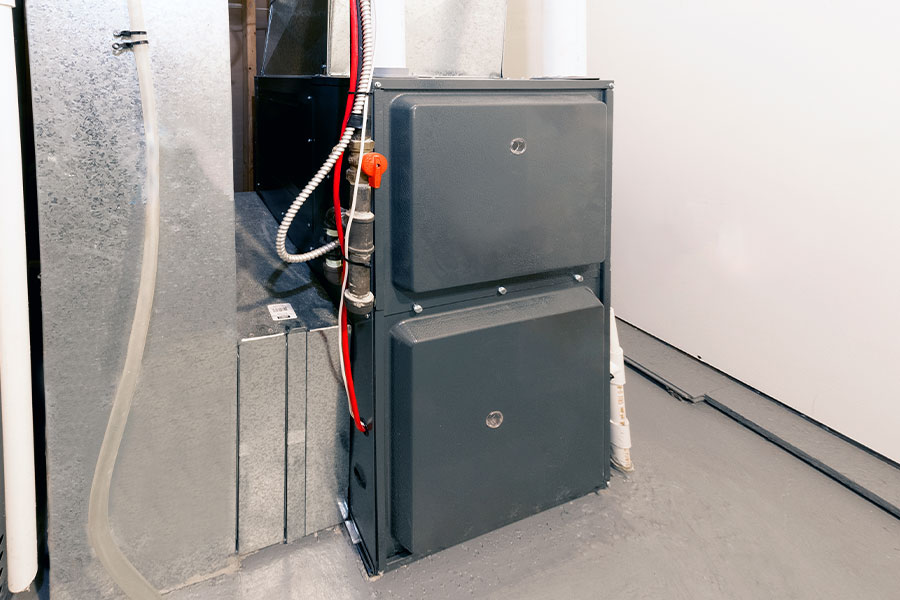
Most of the homes we visit in the Homer area sit on rural routes outside the small town center, and that is exactly where we found ourselves on a cold February morning a couple of winters ago. We got a call from a homeowner named Russell whose propane furnace had been shutting off on its own every few hours since the night before. He had already checked the thermostat and replaced the filter, but the problem kept coming back.
When our technician arrived and ran a full diagnostic, the culprit turned out to be a combination of issues working against each other. The thermocouple on his older standing pilot system had weakened to the point where it could no longer reliably signal the gas valve to stay open. On top of that, the burner ports had a significant buildup of residue from years of propane combustion, which was causing incomplete ignition and adding to the shutoff problem.
We replaced the thermocouple, cleaned the burner assembly, and verified the gas pressure was within spec at the valve. Russell mentioned he had been dealing with occasional shutoffs for the better part of two winters and just assumed it was how old furnaces behaved. It is not. His system ran cleanly for the rest of the season, and he signed up for annual maintenance before we left.
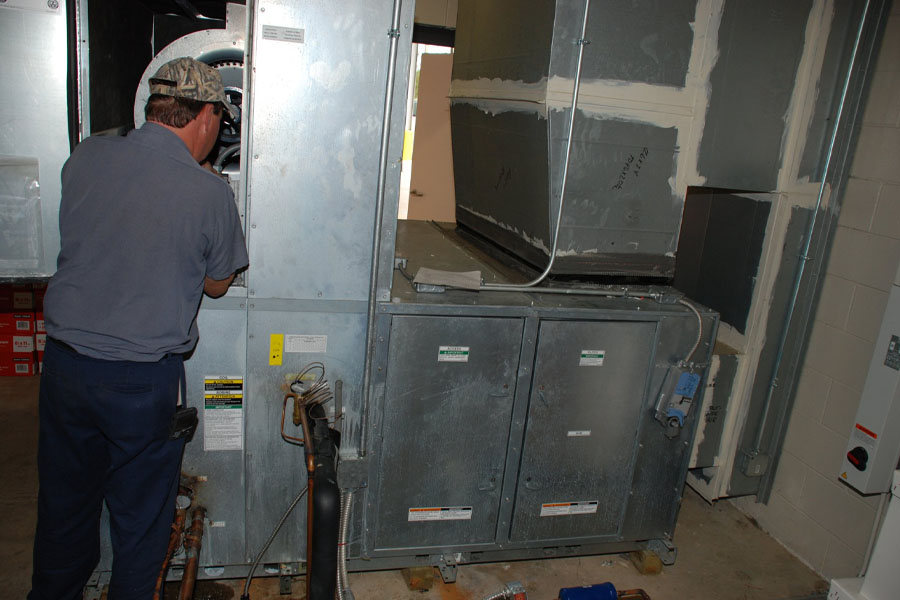
We have been working in communities like Homer since before many of the homes here got their second furnace. That kind of history means something when you need someone who knows rural northeast Georgia and the equipment that runs in it. Here is what we bring to every job.
Distance is not an obstacle for us. If you are on a rural route outside Homer and your heat goes out, we will get there. That is a promise we have been keeping in this region for over 40 years.
Repeated shutdowns are usually caused by a failing thermocouple, a dirty flame sensor, a clogged filter restricting airflow, or an overheating heat exchanger. All of these are diagnosable on a single visit, and most can be repaired the same day.
It depends on the repair cost relative to the system’s remaining value and what condition the heat exchanger is in. We will give you an honest breakdown so you can weigh repair against replacement without any pressure from us.
Yes. Propane systems are common throughout Banks County and the surrounding area, and our technicians are experienced with the specific maintenance and repair needs those systems require, including gas valve calibration and burner cleaning.
A cracked heat exchanger often shows up as a yellow or flickering flame, soot near the furnace, unexplained headaches or carbon monoxide detector alerts, or a furnace that shuts down shortly after starting. A visual inspection by a technician using the right tools is the only reliable way to confirm it.
We serve Homer and the surrounding Banks County area as part of our broader north Georgia service territory. If you are on a rural route and unsure whether we cover your location, just give us a call and we will confirm it quickly.