

Maysville is one of the smaller incorporated towns in Banks County, and it wears that identity comfortably. The community sits along the rolling piedmont terrain between Gainesville and Commerce, and most of the homes here were built during an era when natural gas was not always available on rural routes and building techniques prioritized simplicity over energy performance. The result is a housing stock that leans heavily on older equipment, modest duct systems, and in many cases fuel sources that require more attention than a standard gas furnace setup.
What makes heating in Maysville particularly demanding is the combination of open terrain and elevation variability across Banks County. Unlike more sheltered communities, Maysville sits on land that offers little topographic protection from cold fronts moving out of the north and northeast. When winter weather systems track through the Georgia piedmont, homes here feel the full effect with few trees or terrain features to buffer the wind chill against building envelopes that were never heavily insulated to begin with.
Conditioned Air Systems has been serving Banks County and the broader northeast Georgia area since 1983. We understand the equipment, the terrain, and the people in communities like Maysville, and we show up ready to handle whatever we find.
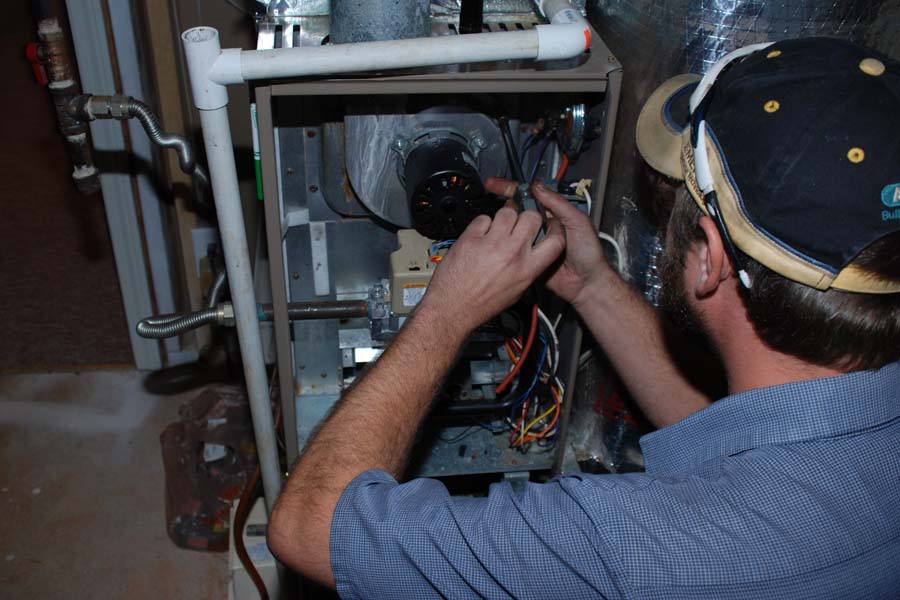
In a small town like Maysville where service options are limited and winters can be unforgiving, catching furnace problems early makes a real difference. Watch for these warning signs before the system leaves you in the cold.
Repeated clicking without ignition is worth acting on quickly. It usually means the igniter or flame sensor is failing, and a furnace that cannot light reliably will eventually stop lighting at all, often on the coldest night of the season. A single repair visit early on is always easier than an emergency call at midnight in January.
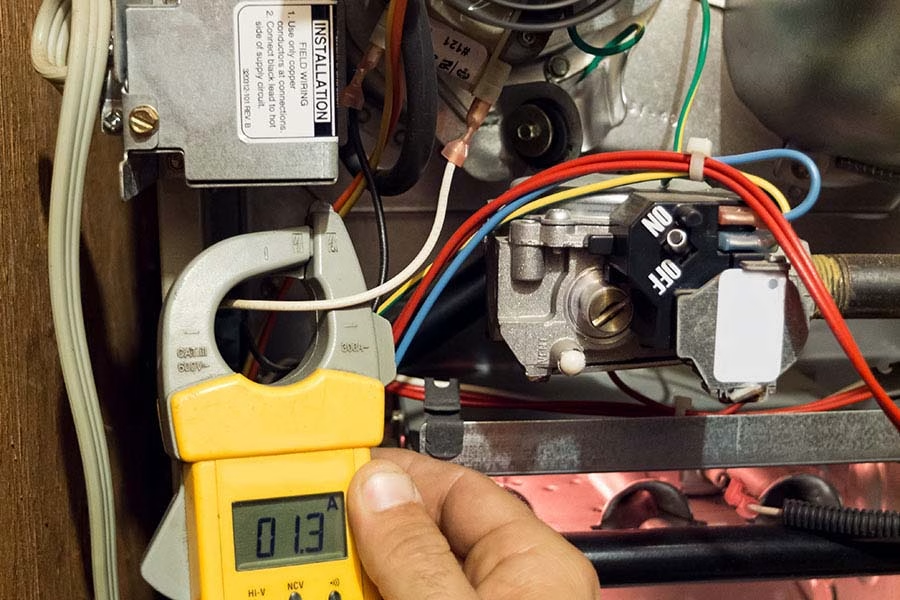
Banks County has a higher concentration of propane-fueled homes than most Georgia counties closer to metro Atlanta, and Maysville reflects that pattern. Propane furnaces require precise burner calibration and clean combustion to operate safely and efficiently over time. When those systems go multiple years between service visits, which is common in rural communities where out-of-sight means out-of-mind, the burner ports accumulate residue, gas valve performance drifts, and the heat exchanger absorbs uneven combustion stress that accelerates wear. The failures we find in these systems are rarely sudden. They are the product of gradual neglect that compounds season after season.
Wind exposure is a factor that does not get enough attention in communities like Maysville. Homes on open lots with minimal windbreaks experience far greater infiltration of cold outside air through gaps in the building envelope, around windows, and through poorly sealed crawl space vents. That infiltration drives up the heat load the furnace has to carry, and systems that were adequately sized for a well-sealed home may be chronically undersized in practice when the wind picks up. The furnace runs longer, wears faster, and the homeowner assumes the system is just aging out when the real issue is the building losing heat faster than the furnace can replace it.
Older single-stage gas furnaces with standing pilot systems remain common in Maysville, and the thermocouple failures, dirty pilot assemblies, and worn gas valves that come with that equipment type are calls we handle routinely throughout Banks County. These are fixable problems, but they need a technician who actually knows how to work on that generation of equipment.
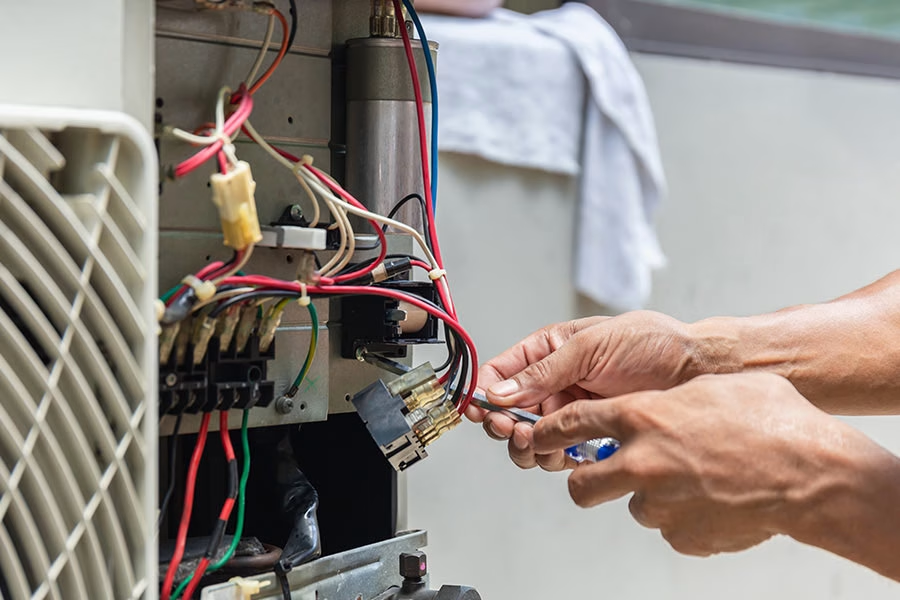
We come prepared for what we are likely to find in a community like Maysville, which means our service vehicles are stocked with parts common to the equipment types that dominate this area, including components for older propane and natural gas systems that newer companies may not carry. The visit starts with a full system inspection that covers the heat exchanger, burner assembly and calibration, ignition components or pilot assembly depending on the system type, gas valve operation, blower motor condition, flue integrity, and all safety controls. For propane systems we also verify supply pressure and regulator function as part of the standard check.
We are direct about what we find. If a system has multiple issues developing, we tell you which ones matter now and which ones are worth watching. If a system is old enough that repair costs are approaching the point where replacement makes more sense financially, we say so plainly and explain the reasoning. We would rather have that conversation upfront than send someone into another winter with a system that is not going to hold up.
Every repair comes with a full one-year warranty on parts and labor. Our NATE-certified technicians train monthly on all equipment types, and that training specifically includes older and propane-fueled systems because communities like Maysville depend on technicians who have not written off that equipment as too old to bother with.
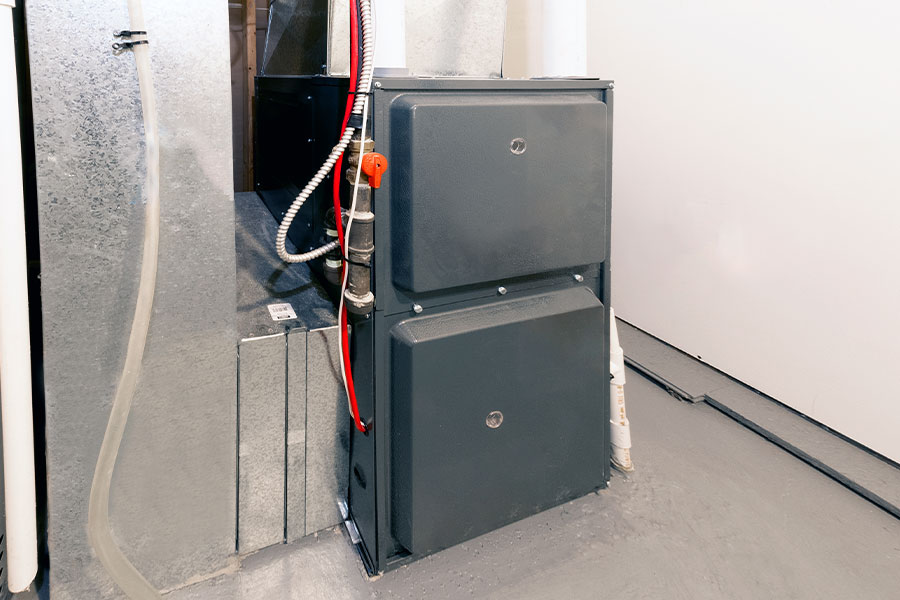
Maysville does not have named subdivisions, but the calls we get here have their own character. A few winters back we got a call from a homeowner named Dale whose propane furnace had been cutting out intermittently for several weeks. He had been managing by relighting the pilot manually every day or two, assuming the problem was just the age of the unit rather than something that could be fixed.
When our technician arrived and ran a full inspection, the thermocouple was worn to the point of being nearly nonfunctional, but that was not the only problem. The burner ports had significant residue buildup from years of propane combustion, which was causing incomplete ignition and adding to the stress on an already weakened pilot assembly. On top of that, the flue connector had developed a small separation near the furnace collar that was allowing trace combustion gases to escape into the utility room rather than venting outside.
We replaced the thermocouple, cleaned the burner assembly thoroughly, resealed and secured the flue connection, and verified proper draft before wrapping up. Dale admitted he had been putting off the call for most of the winter because he expected to hear that the whole system needed to go. It did not. It needed attention, and it got it. He said it ran better than it had in years after we left, which is exactly the outcome we aim for on every job.
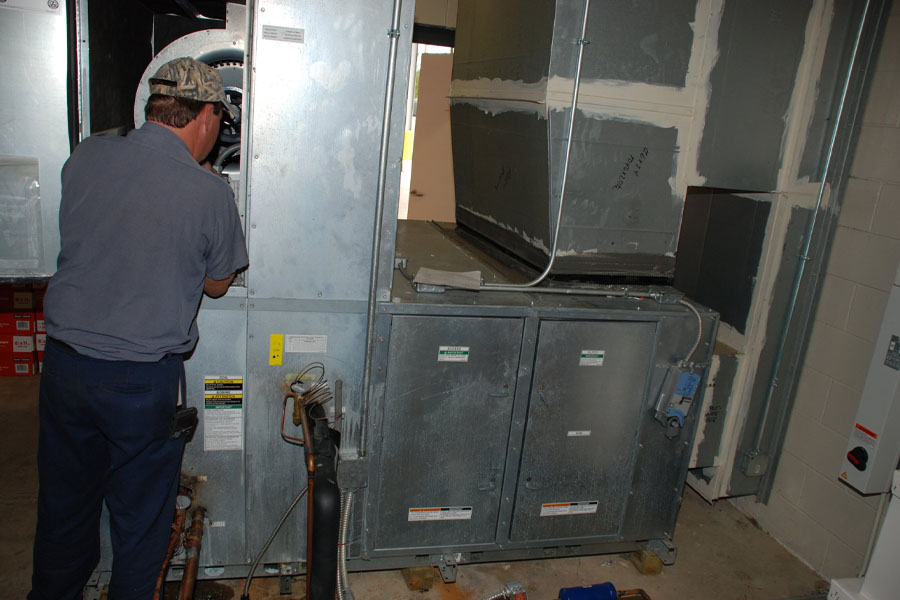
Rural communities do not always get treated with the same urgency as larger markets, and we think that is wrong. Every home in Maysville deserves the same standard of service we bring to any job in north Georgia. Here is what that looks like in practice.
We have been in northeast Georgia long enough to know that the smallest towns often have the greatest need for a company that actually shows up and does the job right. That is a standard we hold ourselves to in Maysville the same as anywhere else we work.
Homes on open lots without windbreaks lose heat through the building envelope much faster during windy cold fronts. That increases the heat load your furnace has to carry, and a system that was adequately sized for a typical winter day may struggle to keep up when sustained winds are driving cold air through gaps in the structure. Improving envelope sealing helps, but a furnace inspection can confirm whether the system itself is also contributing to the problem.
After multiple years without service, a propane furnace typically needs burner cleaning, gas valve and pressure verification, heat exchanger inspection, and a full safety check of the flue and combustion components. Most of these are handled in a single visit. The technician will also tell you honestly if anything found during the inspection suggests the system is approaching the end of its reliable service life.
It is not a long-term solution. A pilot that will not stay lit on its own is telling you the thermocouple or pilot assembly has worn out. Repeatedly relighting it delays a repair that is usually straightforward, and in some cases it can mask a more serious issue like a compromised flue or a gas valve that is not operating correctly. It is worth having a technician look at it rather than working around it.
Many older furnaces in rural communities like Maysville are repairable, and we approach every call looking to fix what is actually broken rather than defaulting to replacement. The honest answer depends on the condition of the heat exchanger, the nature of the repairs needed, and the age of the system. We give you the full picture and let you make the call without pressure either way.
Yes. We offer 24/7 emergency service throughout Banks County and the surrounding northeast Georgia area. Distance is not a reason to leave someone without heat, and if your furnace goes out overnight or over a weekend, we will get a technician out to you as quickly as we can.